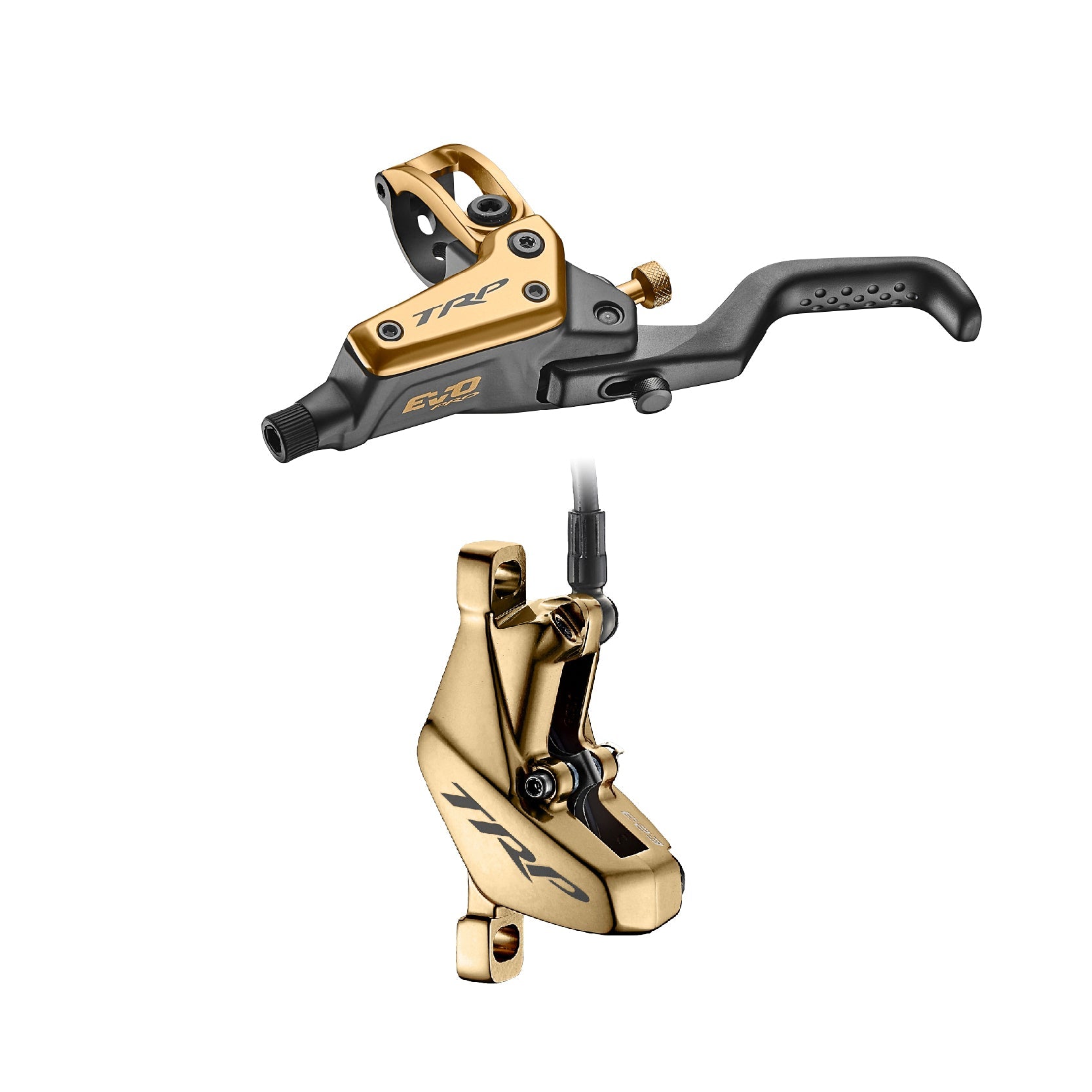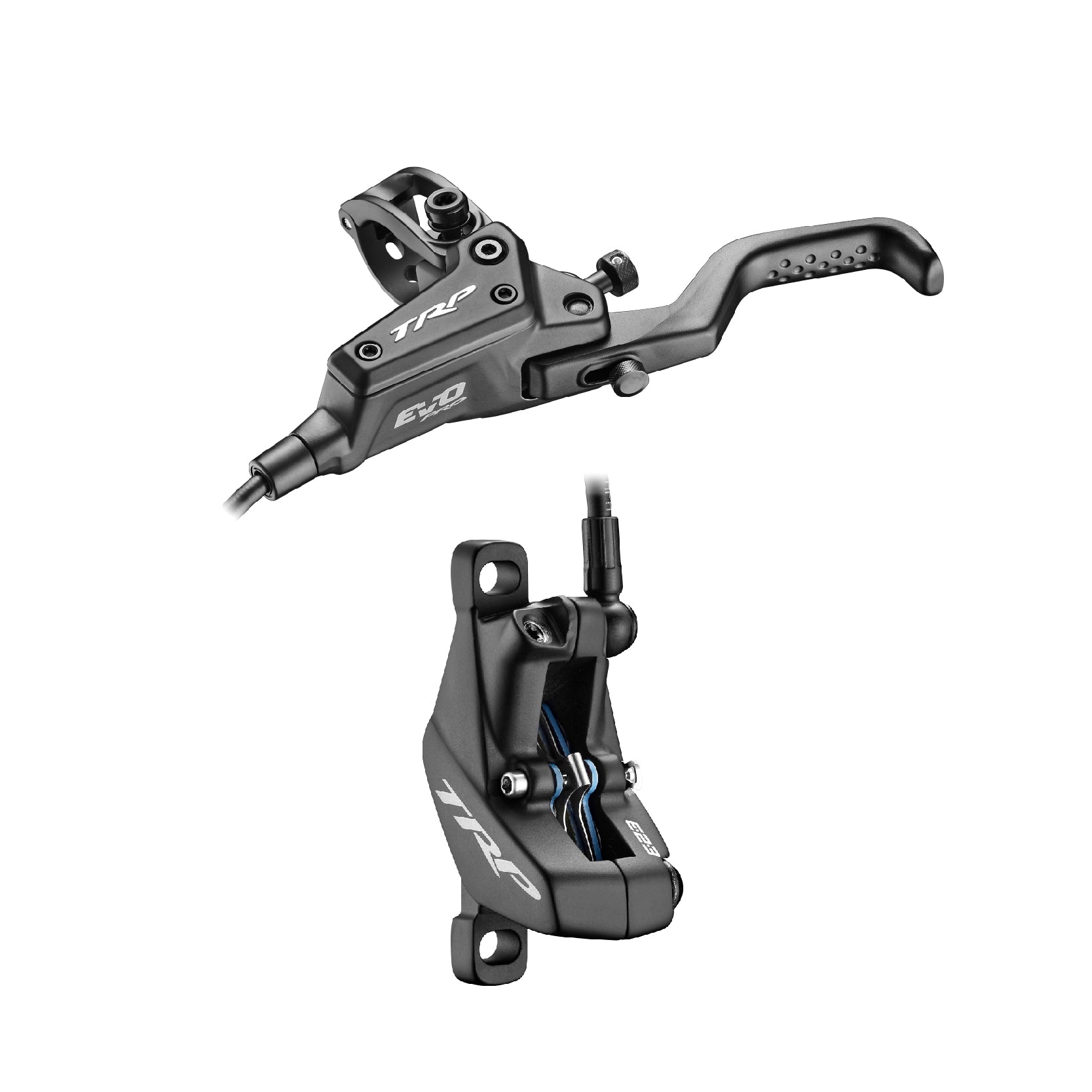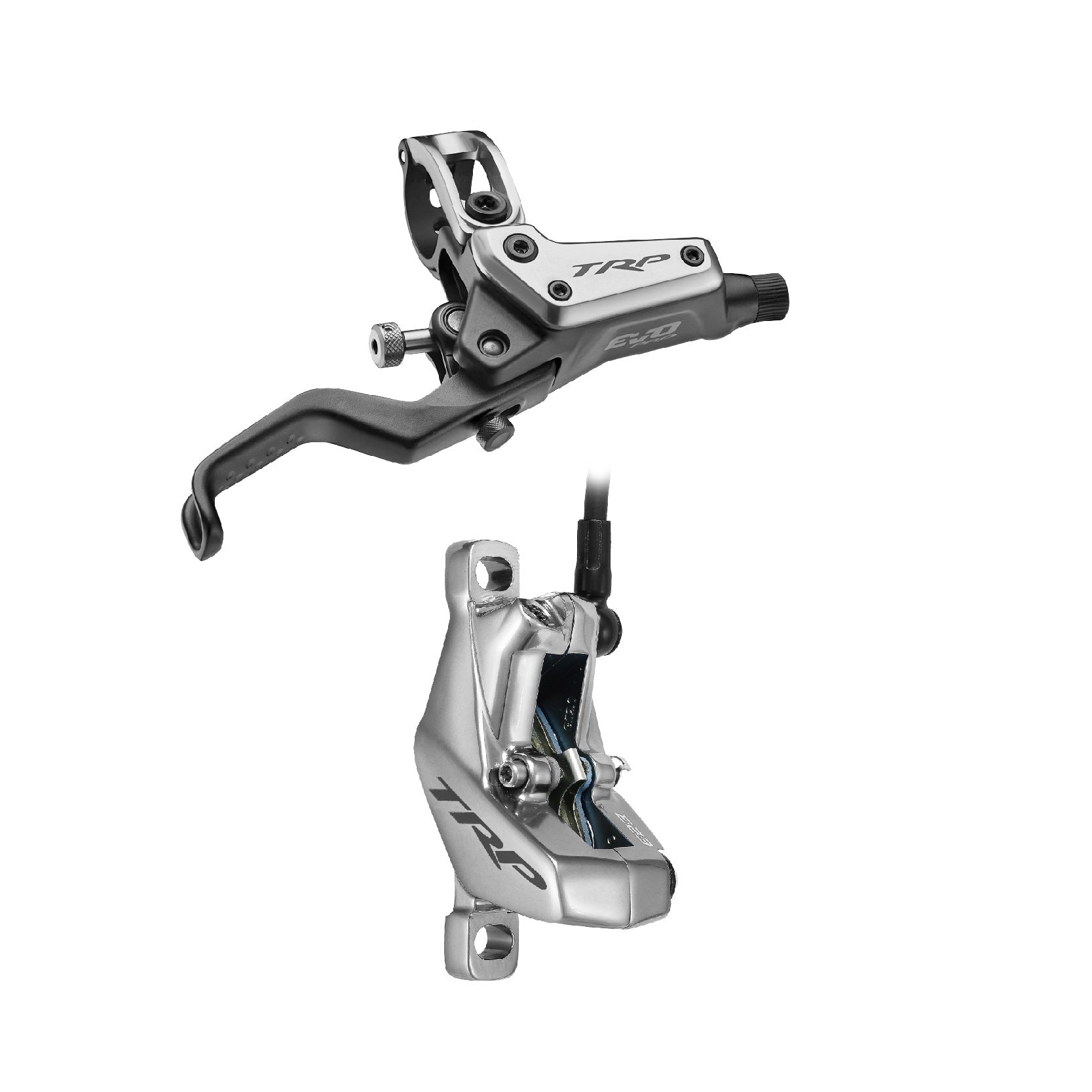
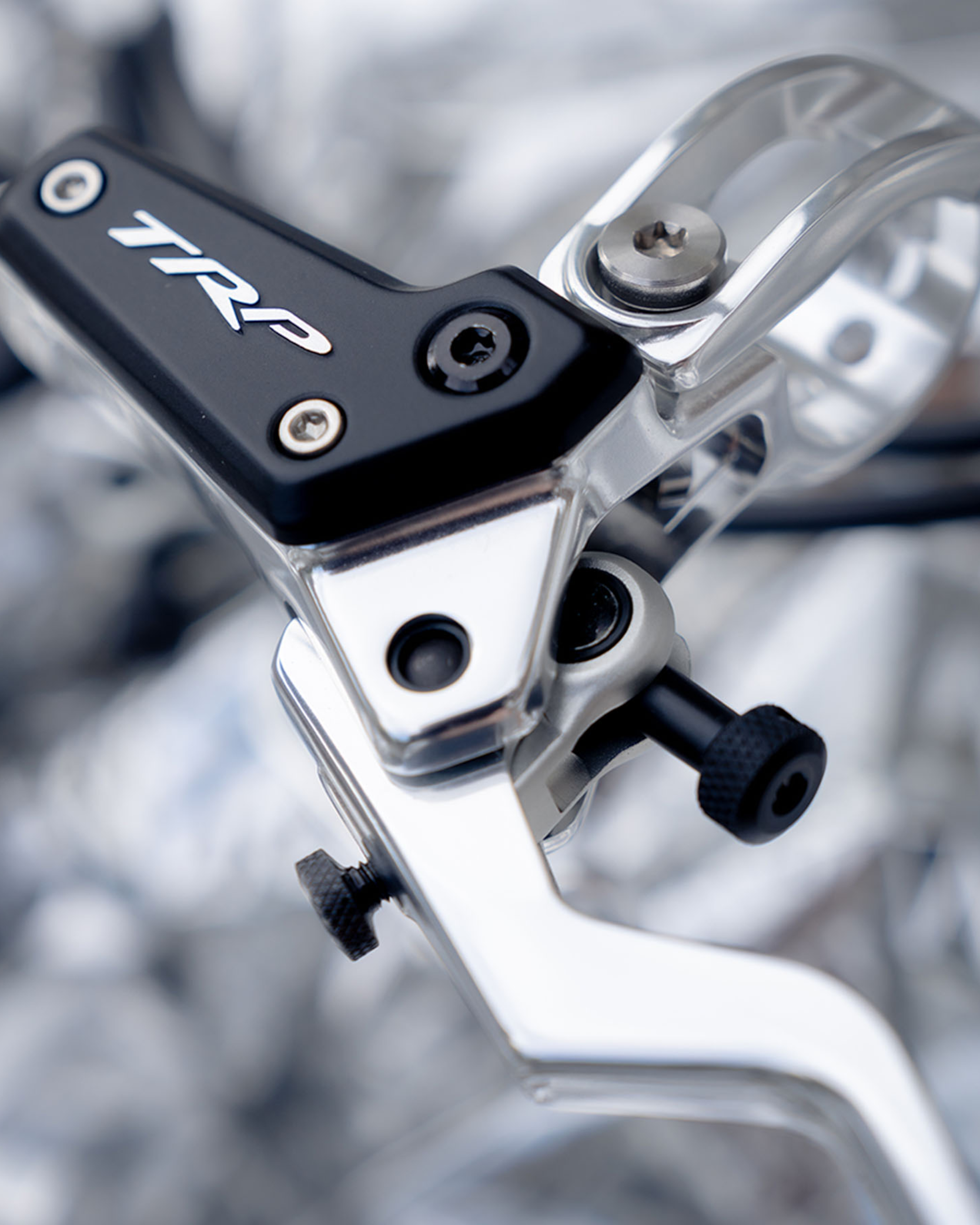
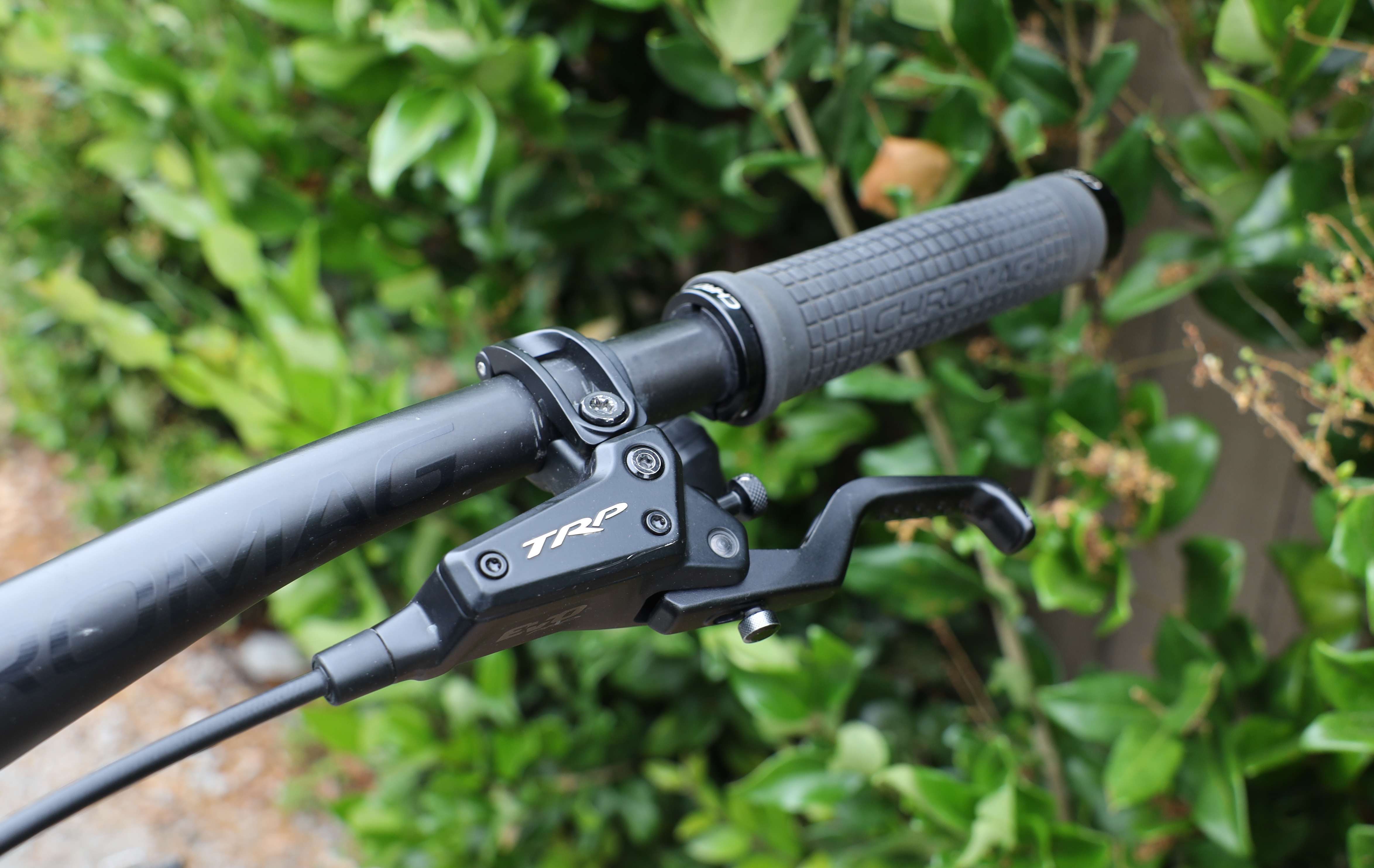
TRP brakes have always been praised for their excellent power and consistency. The beloved DH-R Evo brake was often a fan favorite, but many riders struggled with the ergonomics of the lever, as it only worked well for certain hand sizes. Earlier this year, TRP addressed these issues with the introduction of their Evo Pro brake. I’ve spent the last six months putting them through their paces.
The Evo Pro was designed to build on the existing DH-R Evo platform, offering a more premium option for riders who struggled with the features and ergonomics of the previous brakes.
Details:
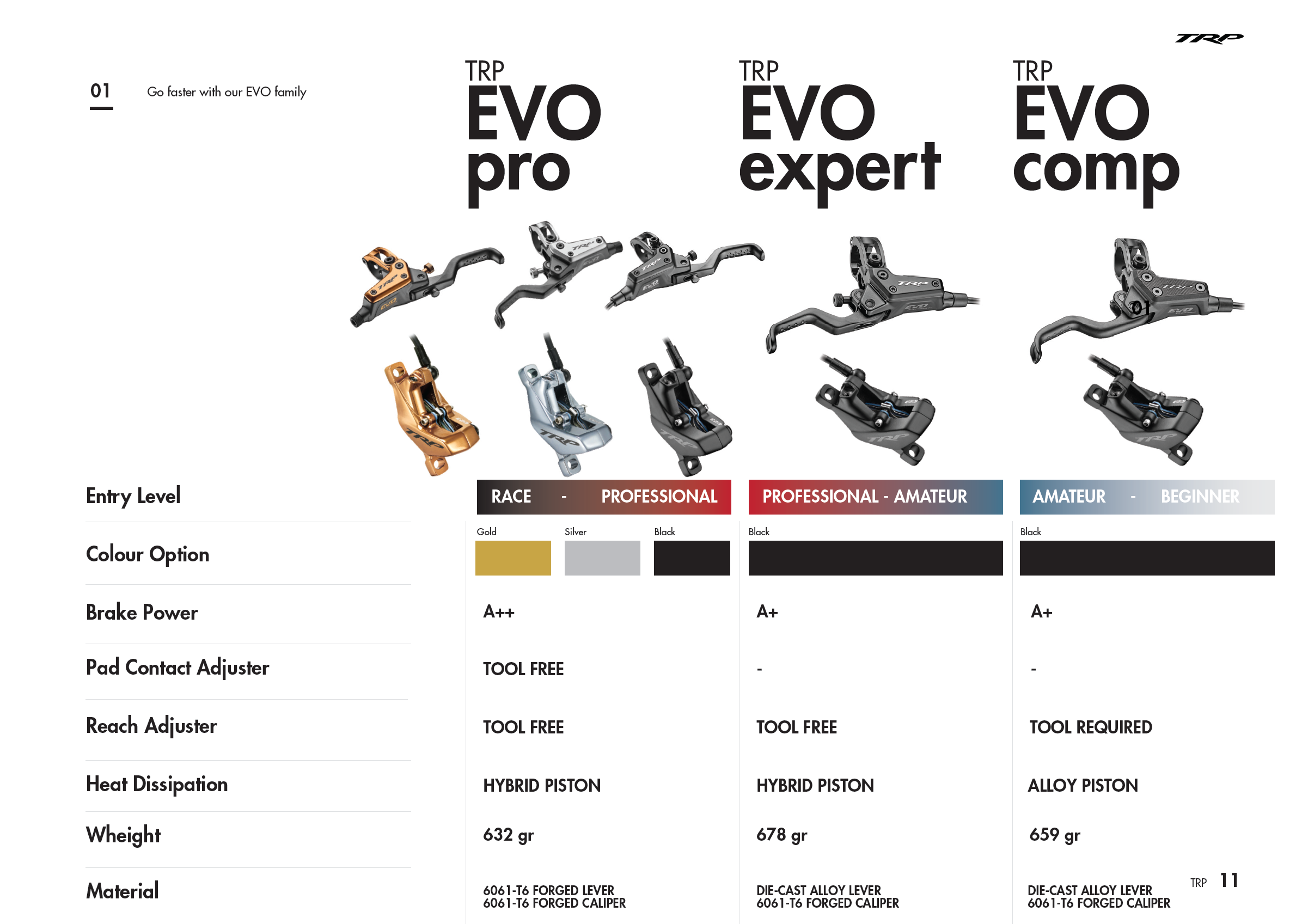
- Tool-Free Reach Adjustment
- Tool-Free Pad Activation Dial (PAD)
- Mineral Oil
- Resin and Semi-Metallic Pad Options
- 2.3mm Thick Rotors
- 3 Color Options
- MSRP: $307.99–$329.99
Updates & Details:
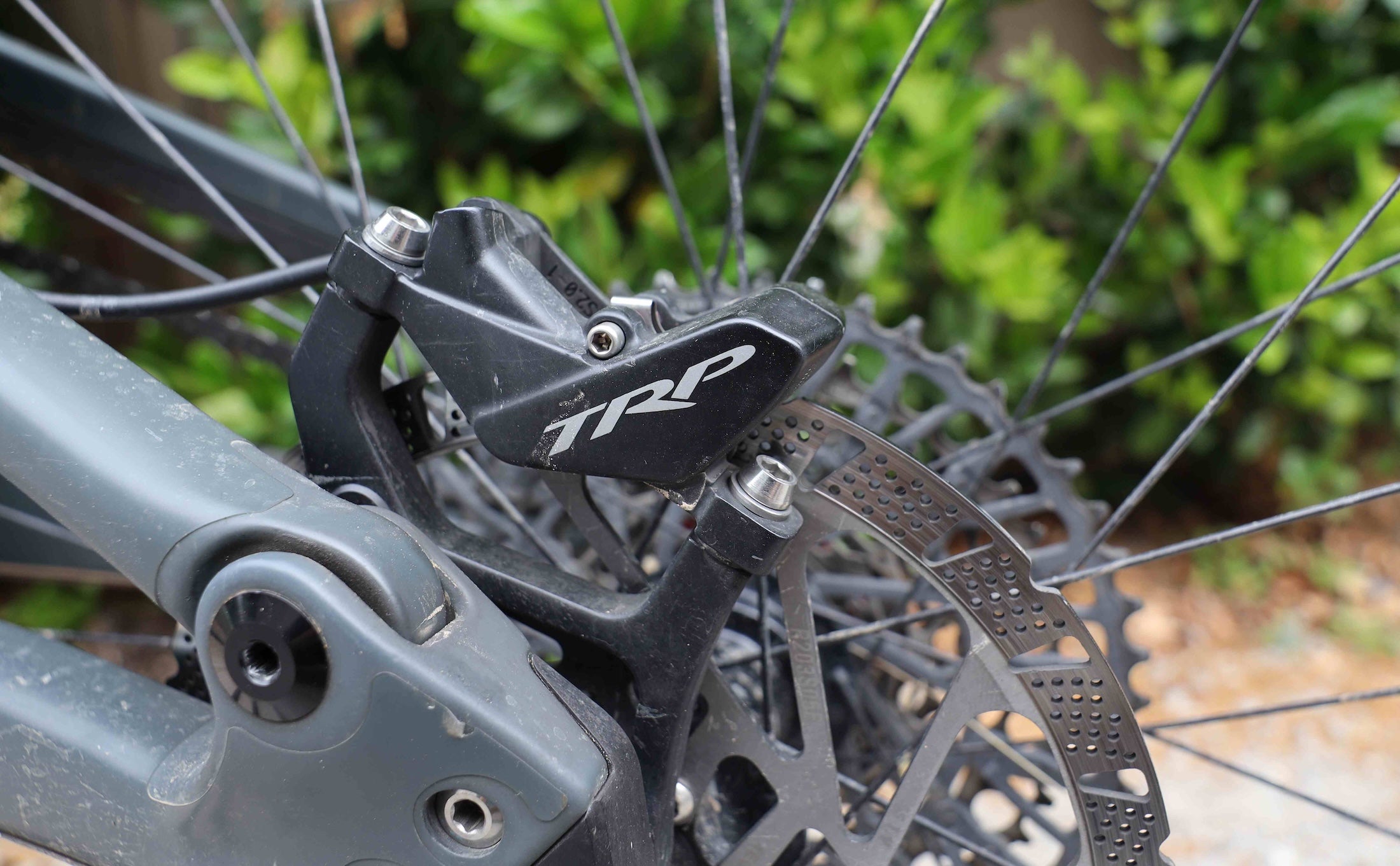
Let's start with a quick overview of the TRP DH-R Evo and the current Evo Pro before diving into the updates. The Evo Pro lever uses a 9mm piston and pushes a proprietary mineral oil through a 5mm hose. The caliper houses four 16mm stainless steel/composite pistons.
The key updates for the Evo Pro are centered around the lever, making it a better brake overall. This means the caliper, pads, rotors, fluid, and lever fittings are all the same as those on the previous DH-R Evo. The update has also slightly increased the max power output at the wheel, but that improvement is less noticeable than the updated ergonomics.
The most notable update is a more hooked lever blade, which brings the bite point closer to the bar. The lever reach is adjustable via a knob on the front of the lever, with about 23mm of range—from closest to farthest from the bar.
TRP also introduced the all-new Pad Activation Dial (PAD), which works as a lever bite firmness adjuster rather than a position adjustment. This means you’ll need to balance the lever reach and PAD dial to control your bite point.
Aside from braking performance, the new Evo Pro is designed to be easier to live with, thanks to clean cockpit routing and a smaller overall footprint. An updated clamp design that fits both SRAM MMX and Shimano I-Spec EV is also appreciated. Many riders complained about not being able to properly position their dropper or shifter on the DH-R Evo, so this improvement addresses that.
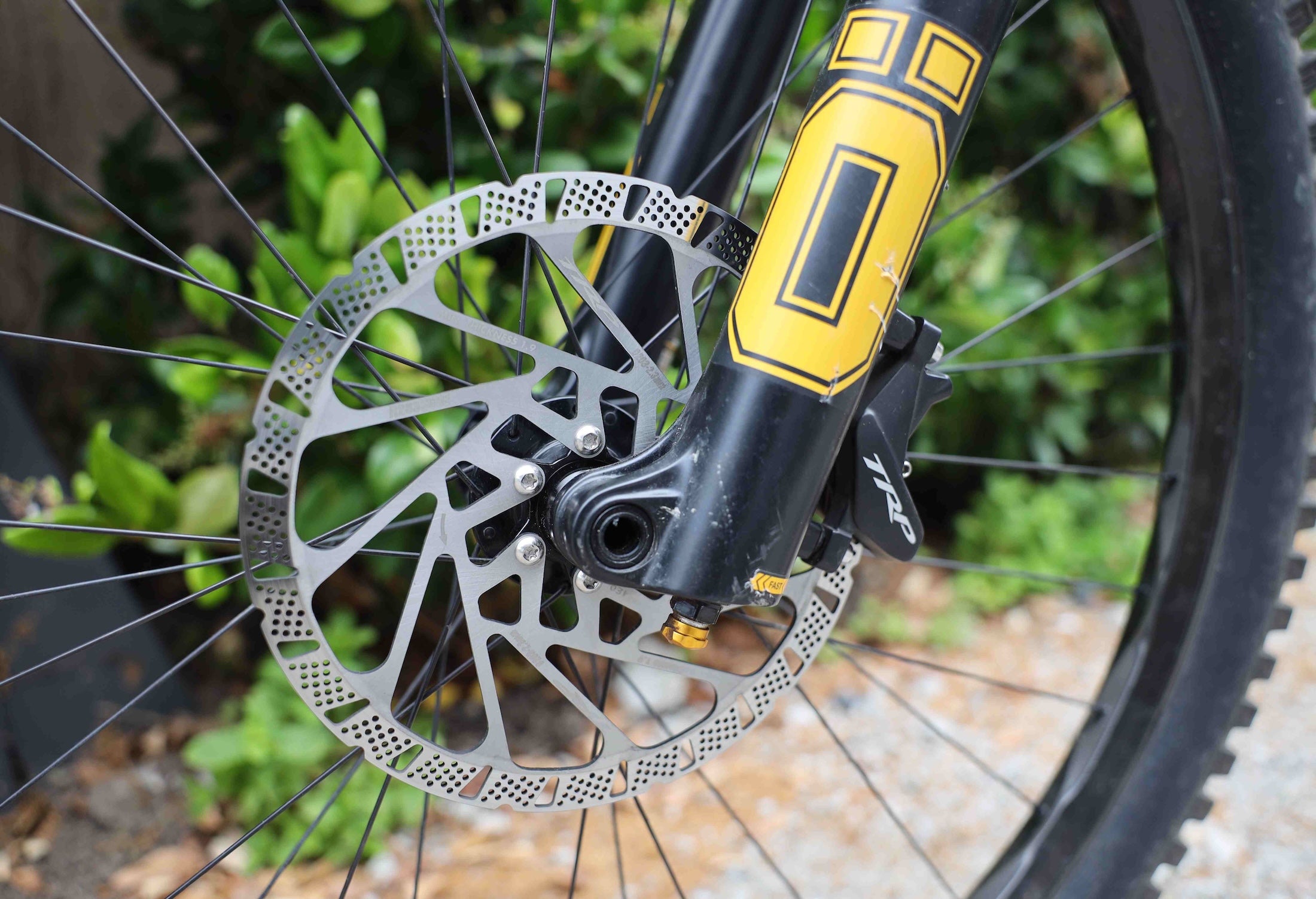
Over a year ago, TRP launched the RS05E “Race Rotor,” which claimed to provide 10% more deceleration than their previous R1 rotor. These rotors were designed to offer more power and consistency at the wheel by retaining heat and staying hotter for longer. This results in maximum braking power when you hit the first corner on the trail. Like all TRP rotors, the Race Rotors are 2.3mm thick, providing greater rigidity and 8% more cooling compared to the standard 1.8mm rotor.


Installation & Service:
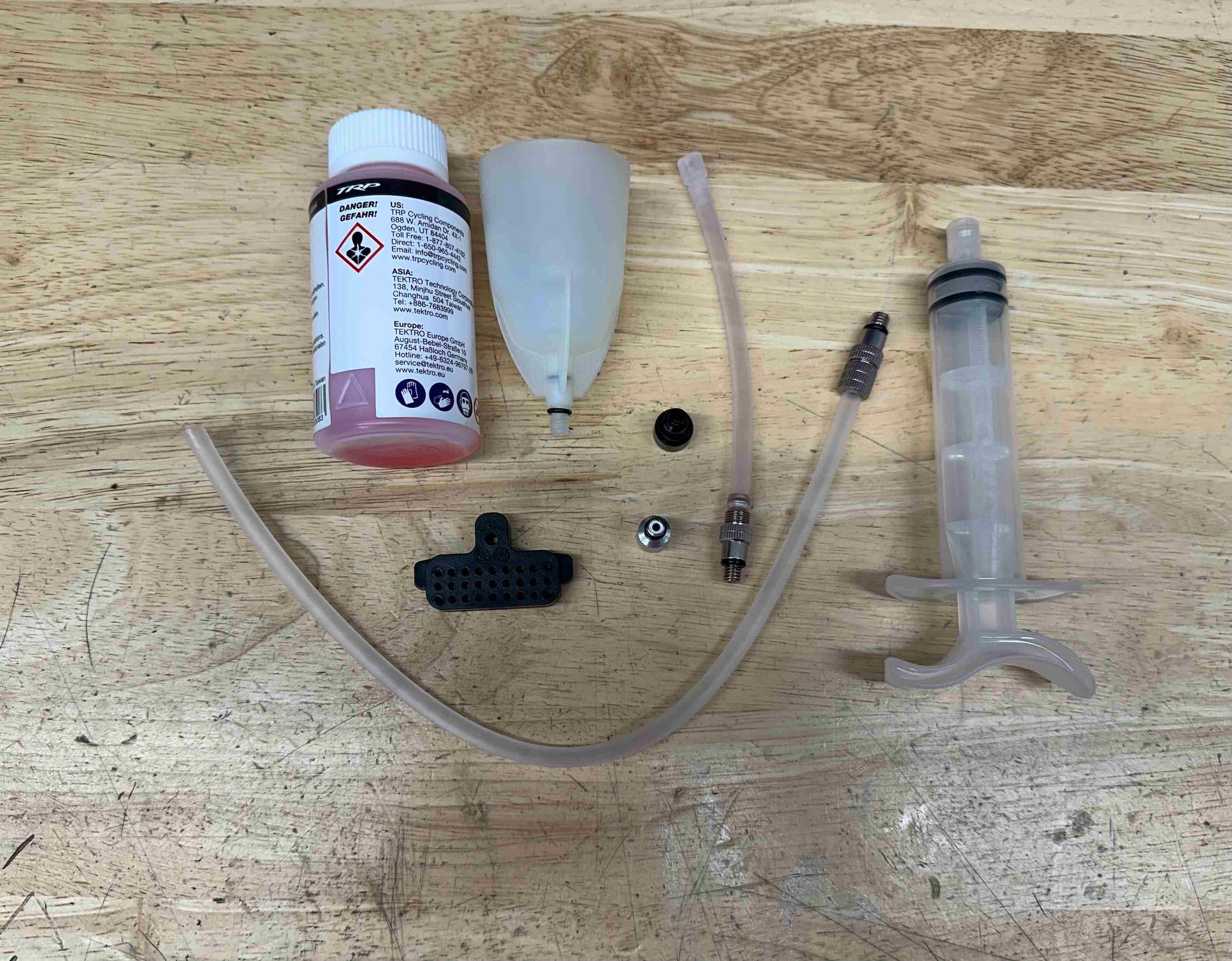
TRP has always made installation easy, and the Evo Pros aren’t much different from the DH-Rs. There is one new step—called the “piston massage”—which helps remove air bubbles and maintain a consistent bite point.
The brakes come pre-plugged on both ends. After bolting up the brake and cutting the lines, TRP recommends performing the piston massage and a lever purge to ensure there’s no air in the system. Using a clean rotor or similar tool, TRP instructs you to wiggle it back and forth with a small tube of oil while making slow pumps at the lever. This ensures all pistons fire evenly and eliminates lazy pistons. After that, reinstall the wheel and close up the system.
I’ve done one full bleed on these brakes, and the process is identical to the previous system—using a syringe at the caliper to push fluid into the bleed cup at the lever. While effective, I found this bleed procedure messier than other brake systems, and it required a thorough caliper clean afterward.
Performance:
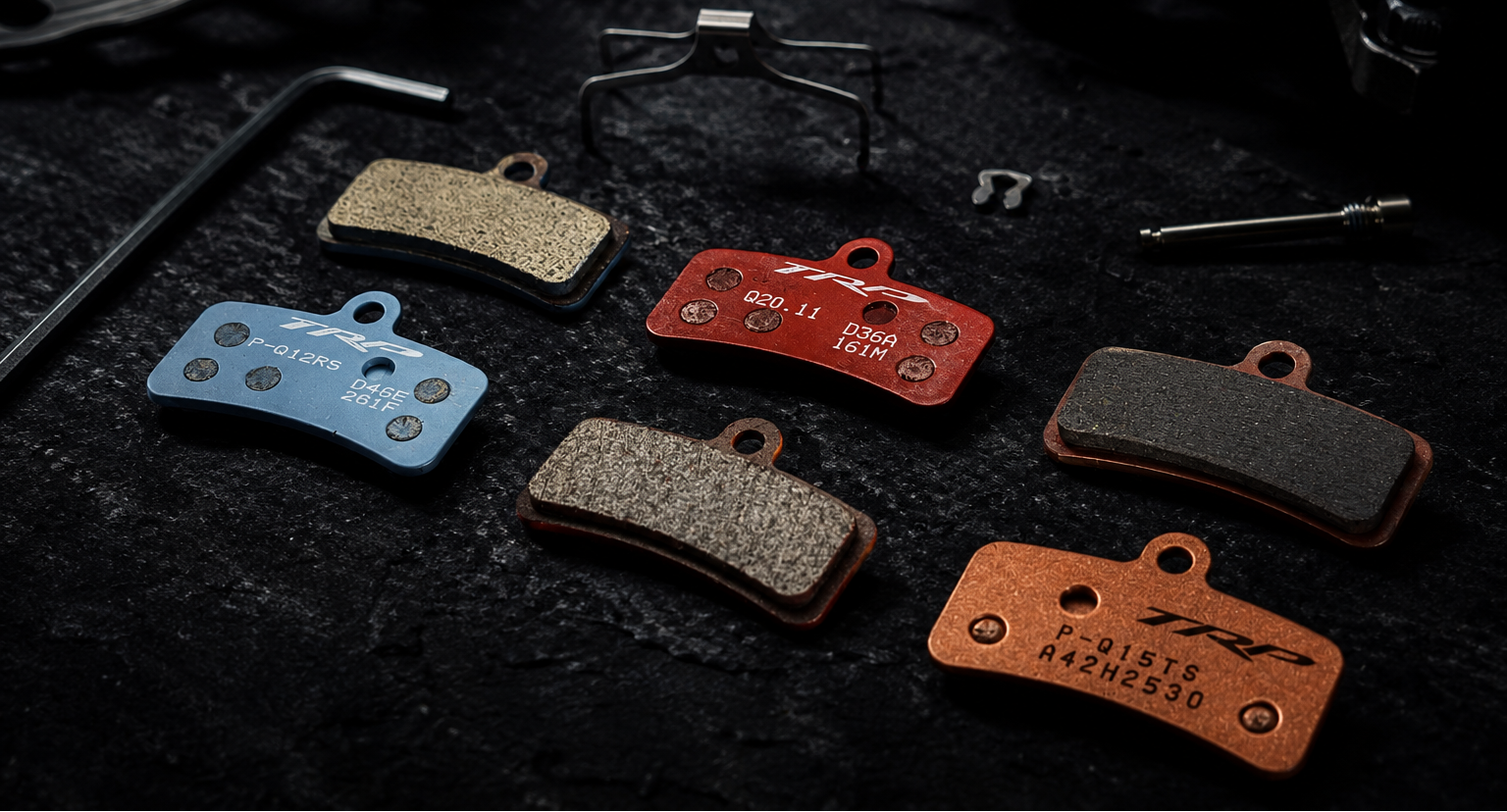
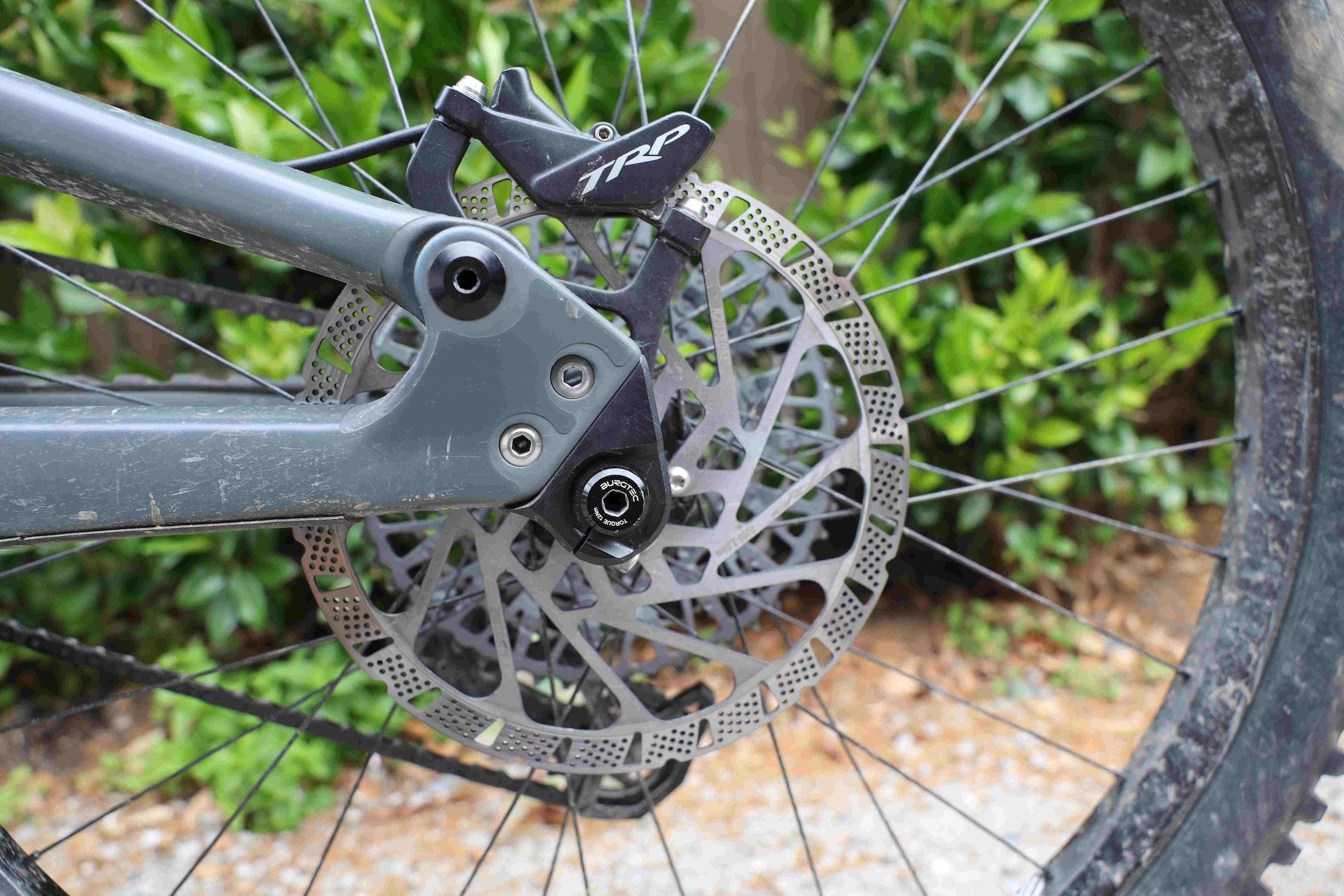
I’ve been running the TRP Evo Pros on my Forbidden Dreadnought V2 for six months. I used this system with two of TRP’s 203mm Race Rotors and semi-metallic pads. I initially used the stock blue performance resin pads, but found they tended to glaze when they got really hot, so I settled on the semi-metallics.
TRP now exclusively makes resin pads and no longer offers fully metallic options.
Bedding in the pads was quick and easy, following the TRP guide on their website. Once bedded in, the Evo Pros felt very similar to the DH-R Evos—quickly coming up to power and delivering consistent performance throughout the entire run. The Evo Pros are incredibly strong—on par with the likes of SRAM's Maven, Hayes Dominion, Magura MT7, and Hope Tech 4 V4.
TRP is often praised for the consistent build-up of power. While some brakes come on strong at the beginning, TRPs tend to gradually build power, keeping them very predictable at any point in the lever stroke. The Evo Pro was no different—this power build was very predictable and easy to modulate. Getting full power was never hard with the Evo Pros; it’s as simple as: the harder you pull, the more power you get.
I found the Evo Pros to be some of the easiest brakes to drag. Due to their linear power build, you can slow down smoothly with more precision. However, on rougher terrain—like braking bumps or gravel—the TRP pads, in conjunction with the Race Rotors, tended to rattle and make noise, which didn’t give the most premium feeling.
About pads wear, I went through about half a pad on this 6-month test. During this, I was super pleased to find how little lever throw did not change. I usually find myself reaching for a contact adjuster at this point in a pad's life, but this wasn’t the case on the Evo Pros, making them a truly set-and-forget brake.
The light lever feel is a hot topic these days. Fans of the DH-R’s light lever throw will be pleased with the Evo Pro, as it feels nearly identical. While not as light as the Hayes Dominion, the Evo Pros are light enough and move freely on a bushing without any vertical play.
It’s nice to see TRP adding compatibility with MatchMaker and I-Spec EV, though I was bummed that TRP still doesn’t have integration with the AXS Pod, which is common on many modern bikes.
The PAD and reach adjustment do a great job of making the brake work for riders with different preferences. Whether you prefer a bite point that’s close, far, firm, or soft, the adjustment is very effective. One thing to note about the PAD dial is that it changes the feel (softness or firmness) of the lever, unlike SRAM’s contact adjuster, which adjusts the location of the bite point. Because of this, you’ll need to balance the reach and PAD settings to find your preferred setup, which isn’t something you typically need to do with all brakes. Personally, I kept the PAD dial at its firmest setting, with the lever reach all the way out, to control the bite point.
Pushing fluid through different-length brake lines while maintaining consistency between front and rear brakes is always a challenge. This is why we often see steel-braided lines on high-end brakes. TRP doesn’t offer steel-braided lines, but I found the need for them slightly higher than with other brakes to prevent line bulging and an inconsistent feel between front and rear. The rear brake always felt a little softer and less snappy than the front. Even after adjusting the front PAD to compensate, there was still a noticeable difference in bite feel. While this may not be a dealbreaker for some riders, it is something that can usually be adjusted or bled out of the system more easily on other brakes.
Durability
In terms of durability, the Evo Pros have been neither exceptional nor problematic. I did manage to break a lever blade in a crash, but that’s neither here nor there—competitors’ brakes would have done the same. More concerning was a leak from the caliper bleed port about a month in. Mineral oil leaked from the full-bleed screw, contaminating my rear pads and rotor. However, TRP was fast and professional in replacing the caliper, and I haven’t had any issues since. During this time, I also re-bled both front and rear brakes. I was slightly disappointed to find that the fresh TRP mineral oil was already discolored after a month of use. I didn’t notice any performance drop, but it’s worth keeping an eye on.
Verdict
TRP’s cult following is well-deserved. The Evo Pros are extremely consistent and powerful brakes with light lever action that’s easy to modulate. The ease of setup and usability make them a standout in the market—something other brands could learn from. The brakes are intuitive to use and perform well in a wide variety of conditions.